
Youth players often keep their heads down, locked on the ball, and miss the cues that would let them make a better decision. That leads to turnovers, missed runs, and passes that never should have happened.
This guide covers what scanning actually is, what research says about training it, and specific drills you can start using this week.
Key Takeaways
- Scanning is checking teammates, opponents, and space before the ball arrives—not staring at your feet
- Structured training can raise scanning frequency in as little as five weeks
- Central midfielders and defenders scan most, but every position gains from the habit
- Game-realistic practice, not isolated drills, is what makes scanning stick
- Turning scans into fast, accurate decisions takes longer to build than frequency alone
What Is Scanning in Soccer?
Scanning is a deliberate head movement away from the ball, used to gather information about teammates, opponents, and open space before the ball arrives [4]. That look is purposeful information-gathering—not a nervous glance or a habit of looking busy.
Scanning feeds directly into what researchers call the perceive-decide-execute cycle:
- Perceive — the player scans and takes in the picture of the field
- Decide — the brain processes that picture and selects an action
- Execute — the player carries out the pass, turn, or shot

Skip the first step, and the other two suffer. A player who never lifts their head is deciding and executing based on guesswork, not information.
Why Scanning Matters More Than Ever
The modern game moves faster than it did a decade ago, and players have less time on the ball to make good choices. Former Barcelona midfielder Xavi described the purpose of scanning bluntly: "I take the information on space and I save time to think" [17]. That's the whole point. Scanning early buys you decision-making time later, when the ball actually arrives.
The Science Behind Scanning: What Research Tells Us
Norwegian researcher Geir Jordet has produced the most detailed scanning research available, analyzing hundreds of professional and youth players. In one study of 27 English Premier League professionals across 21 matches, completed passes were associated with a higher scan rate than incomplete ones—0.46 scans per second versus 0.40 [4].
That's a real but modest association, not proof that scanning alone wins games.
Timing matters more than raw frequency. Elite players don't scan while the ball is in play toward them. They scan between touches, looking away right after a teammate touches the ball and looking back before the next touch [8]. This captures changing information without losing track of the ball itself.
Scan frequency also varies by position:
- Central midfielders scan the most of any position
- Central defenders scan more than wide players or forwards
- Forwards scan the least, generally due to their orientation toward goal
A separate study of youth players found central defenders benefited from higher scanning frequency when defending crosses, spotting late runners before the ball arrived [4].
Scanning alone isn't enough. Jordet has noted it's "quite easy" to get players scanning more often, but turning that information into a fast, correct decision takes far longer to train [8]. This is the gap ACTA Football's approach specifically targets: not just teaching players to look, but training the connection between what they see and what they do next.
How to Train Your Scanning Skills: Step-by-Step Drills
Improving scanning follows a clear progression, from simple to game-realistic.
- Start with quick glances in passing drills. Have players take 2-3 shoulder checks before receiving a pass during basic warm-up rondos. No pressure yet, just the habit.
- Add "scan and call" cues. Players must identify a coach's hand signal or a colored cone while receiving the ball, forcing them to look up and process simultaneously.
- Progress to small-sided games with a reward. Only allow forward passes after a player has scanned. This reinforces the habit under actual match pressure, where it matters most.
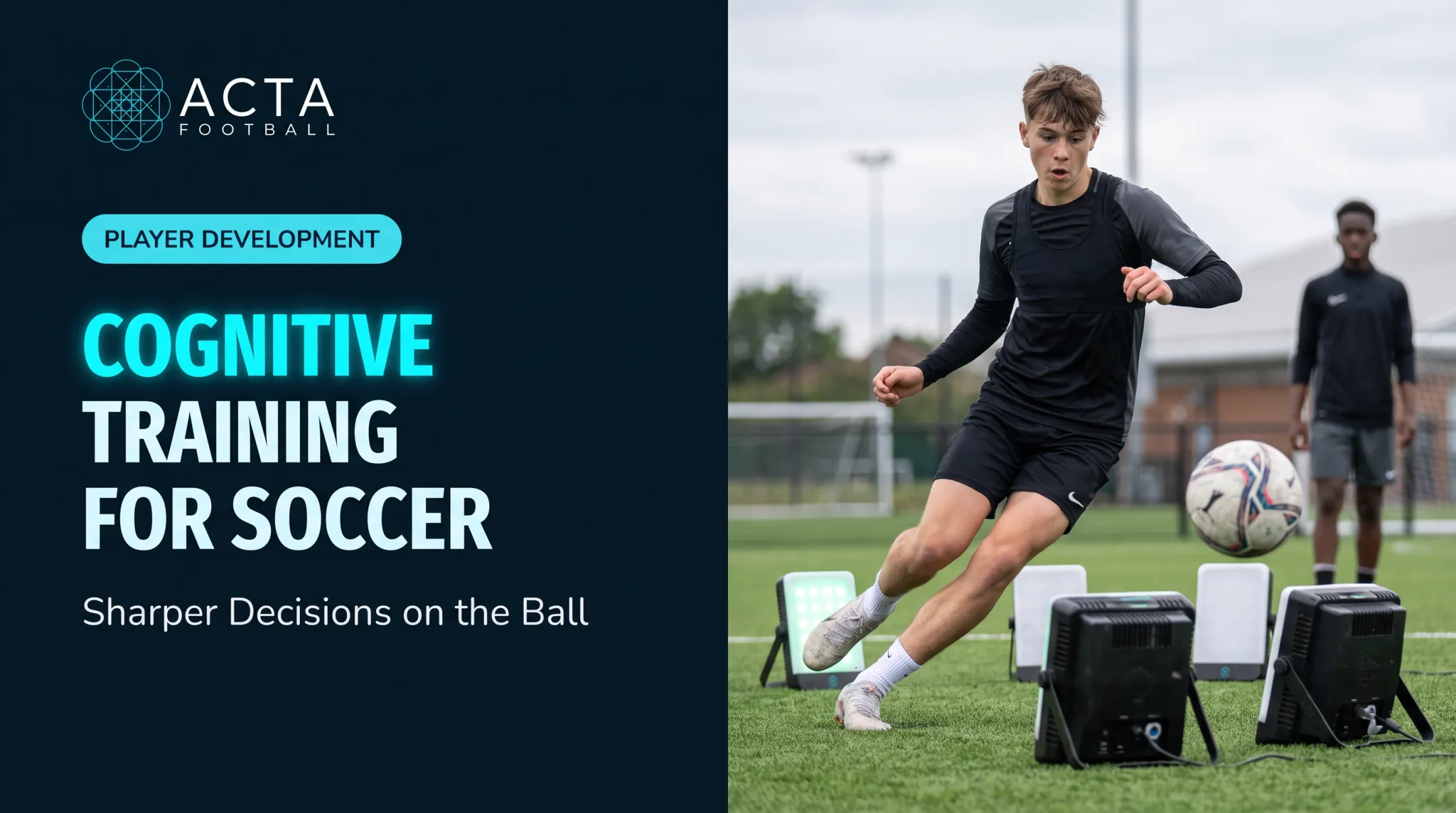
- Use reaction-based tools. Lights, audio cues, or verbal triggers force players to scan and react within a tight time window, closer to real match speed.
- Review match film. Show players specific moments where scanning would have changed their decision. This builds game intelligence alongside the physical habit.

Scanning is like looking both ways before you cross the street: awkward at first, then automatic.
A five-week study of U19 female players found this kind of structured, game-connected training raised average scans per situation from 0.86 to 1.47, with the improvement holding at follow-up testing [1]. That's a measurable gain from just five weeks of focused work.
Common Mistakes That Slow Scanning Progress
Even motivated players stall out for predictable reasons:
- Scanning too late. Looking up right as the ball arrives instead of between touches leads to rushed, low-quality decisions.
- Vague coaching cues. Telling a player to "check your shoulder" without explaining what to actually look for (movement, space, an open passing lane) produces empty head-turns, not useful information.
- Isolated drill practice only. Scanning trained in a cone drill doesn't automatically transfer to a match. It has to be practiced where it's actually necessary, under pressure and with consequences.
How ACTA Football Builds Faster, Smarter Scanners
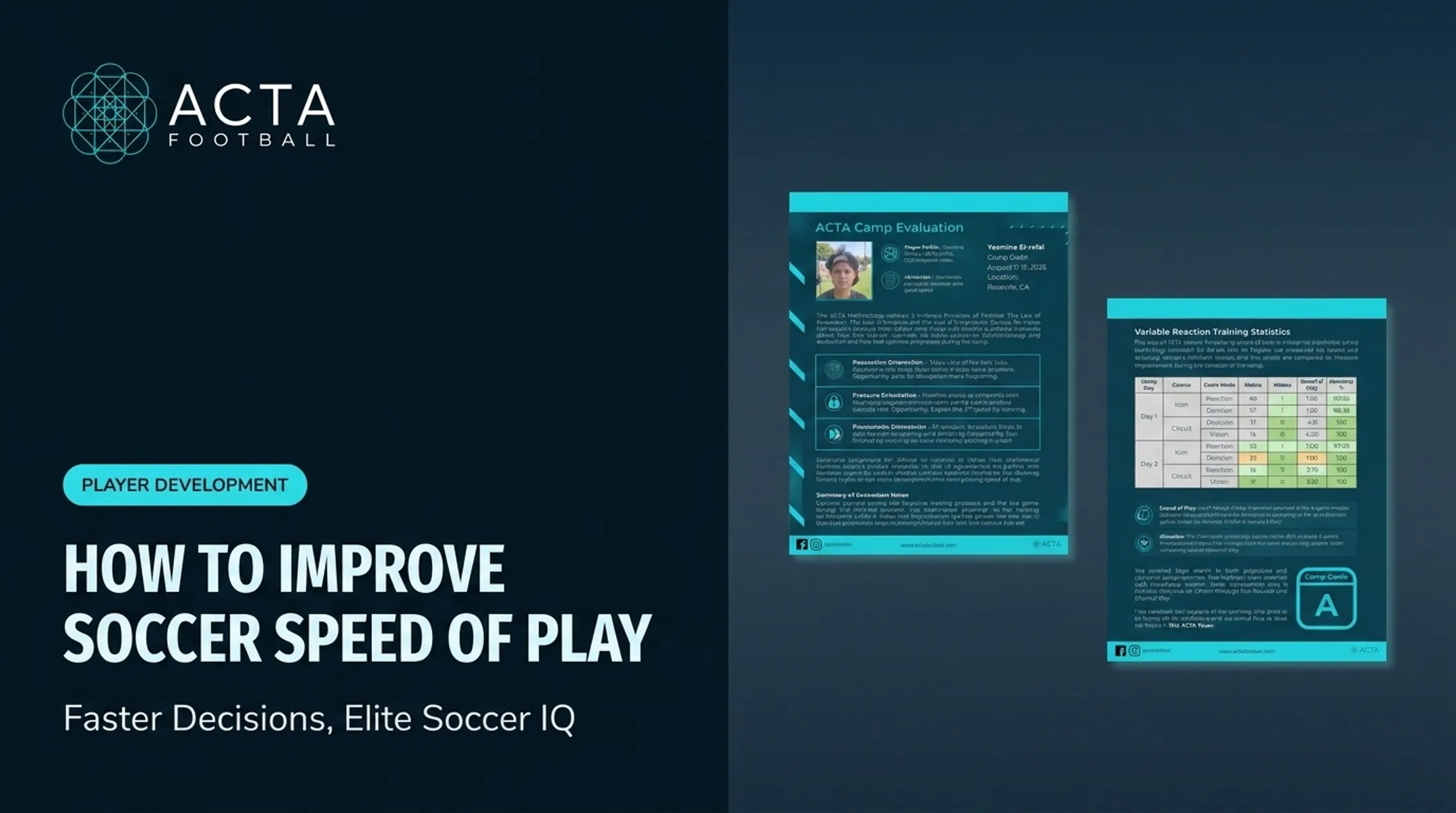
ACTA Football's approach starts with a player's own match film, not generic drills. Coaches score the footage to pinpoint where decision-making breaks down, then build one-to-one sessions around those moments.
Action Lab AI measures speed-of-play and accuracy so players and parents get machine-based scores—not only a coach's read. In ACTA's technology-supported training, players improve speed and accuracy by up to 30%.

The coaching staff brings direct relevance to game-reading development:
- Garrett Morgan (Founder & Technical Director): 15 years elite coaching; 30+ Youth National Team players across six countries
- Sarah Fawcett (Girls Director): Women's Youth National Team staff; WPSL and USL-W coaching
- Korynn Najera (Program Director): Seven years club and ODP coaching; four-year collegiate player
Film-based scores plus this coaching bench help players close the real gap: scanning more and deciding faster—where most youth players get stuck.
Frequently Asked Questions
How can I train my scanning skills in football?
Start with simple passing drills where you take 2-3 glances before receiving the ball, then progress to small-sided games that reward scanning under pressure. Add film review to reinforce what you would have seen with more practice.
What is scanning in football?
Scanning is the deliberate act of looking away from the ball to gather information on teammates, opponents, and open space before receiving a pass. It feeds directly into faster, better decision-making.
How often should players scan the field?
Elite professionals scan multiple times per possession, with research showing top performers around 0.6 scans per second in key moments [4]. Youth players can start with a simpler goal: scan every few seconds and build from there.
Why do some players forget to scan during games?
Scanning is a habit, not a one-time instruction, and habits require repetition under realistic pressure. A player who only practices it in isolated drills won't automatically apply it in a live match.
Is scanning more important for certain positions?
Central midfielders and central defenders rely on it most, since they're constantly reading multiple passing lanes and defensive situations. Still, every position, including forwards, benefits from better field awareness.
Can scanning really be taught, or is it natural talent?
Research confirms scanning frequency can be trained relatively quickly at any level, with one study showing meaningful gains in just five weeks [1]. The harder, longer-term work is converting that information into faster decisions on the ball.